The words "WHO? WHAT? WHEN? WHERE? WHY? HOW?" written in white on a grey background. In the middle is a crumpled up ball of yellow paper, with white lines drawn around it and under it to look like a light bulb.

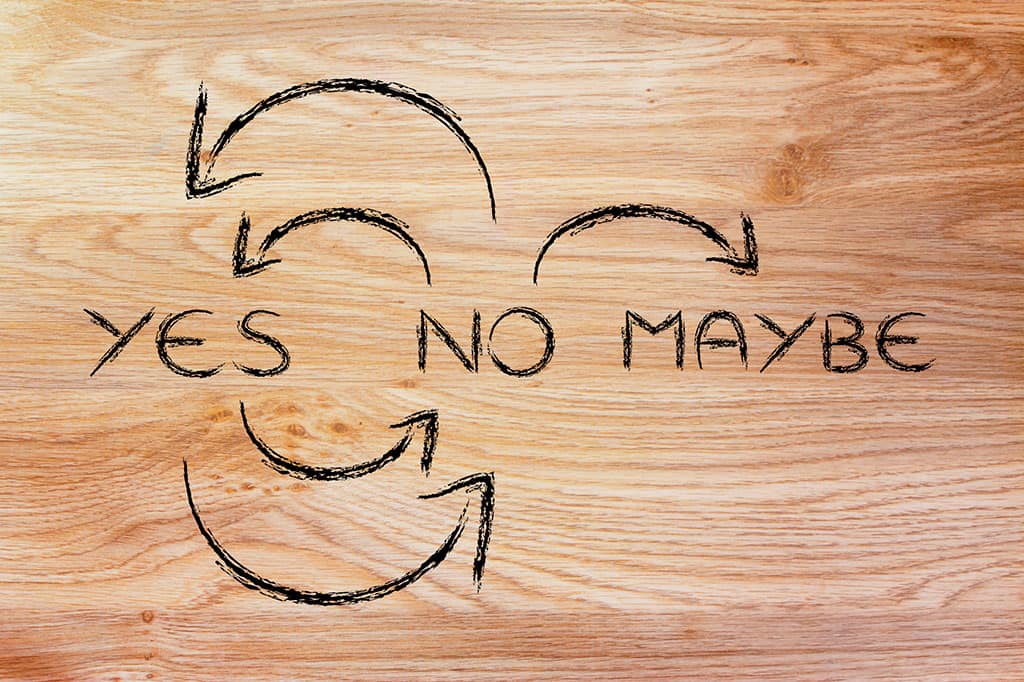
Who, What, When, Where, Why, and How in Japanese: A Complete Guide

You may remember studying the “5ws” (and how) in English class at some point. These words are essential communication tools in Japanese.  In this guide, we’ll break each word down and explain it in full detail. Some of these question words have multiple forms (for polite/formal conversations). Take time to read each explanation carefully and … Read more

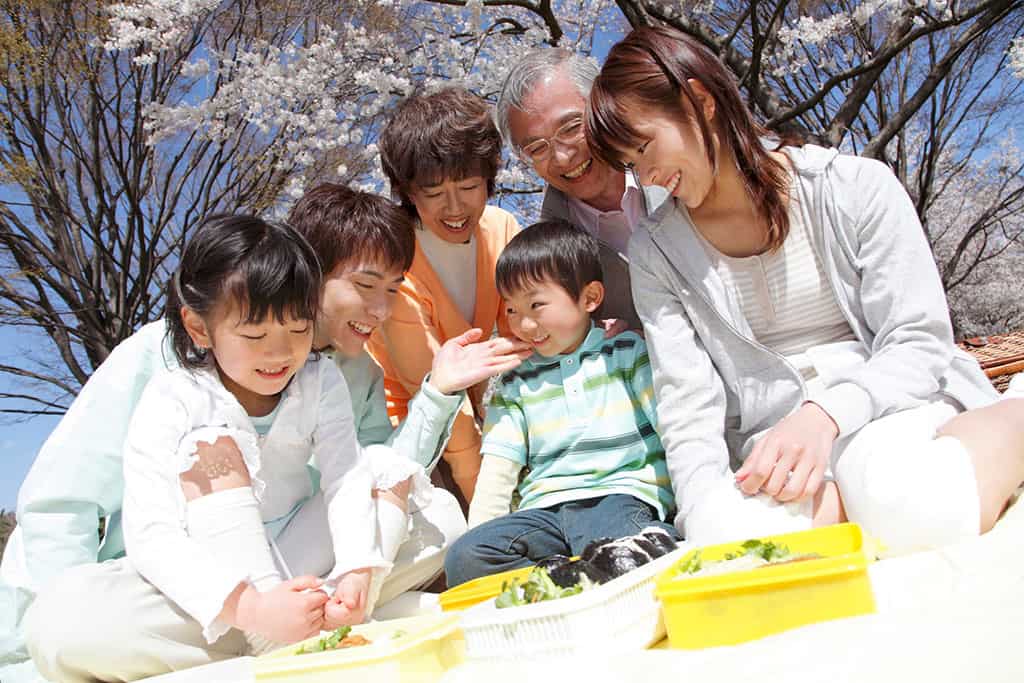
An Asian family having a picnic. There is a mom, dad, grandpa, grandma, and a young girl and boy in the picture.

How to Say Family in Japanese (and Family Members)

It’s no secret that Japan is a very family-oriented culture. Japanese strongly value bonding with their blood relatives, friends, neighbors, and colleagues. Common Japanese practices like going out for drinks with your boss and co-workers after work or cleaning the school with your classmates foster a similar close-knit family environment between peers.  Considering the concept … Read more

In the background, people can be seen crossing the street with a crosswalk in what appears to be Tokyo, but they are blurry. The foreground as text that reads, "Shitsurei Shimasu Essential Japanese Etiquette."

Understanding Shitsurei Shimasu: Essential Japanese Etiquette

失礼します (shitsurei shimasu) is a staple phrase in Japanese work and school environments. It’s used to excuse oneself for doing something rude. 失 means flawed or defective, and 礼 means etiquette or manners. Put this word 失礼 with します, or to do, and you’ve got 失礼します: “to do something rude.” A good English translation of … Read more

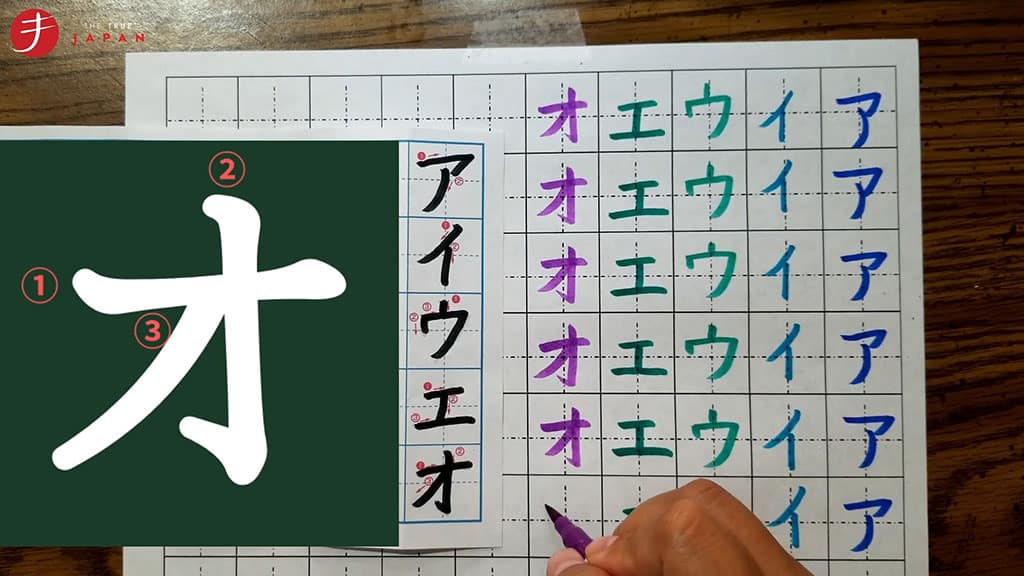
The katakana character "o" is shown on the left side of the image. On the right, a girl's hand can be seen writing the katakana characters "a, i, u, e, o" in different colors of ink with a pen on the right.

The Complete Guide to Learning Katakana Step-By-Step

カタカナ (katakana) is one of the fundamental components of the Japanese writing system. ひらがな (hiragana) and 漢字 (kanji) are the other two Japanese writing systems. If you want to learn all of the katakana for free, this step-by-step guide with video will teach you how to pronounce, read, and write all of the katakana characters. Modern Katakana Characters Modern katakana has 46 base characters: five singular … Read more

An Asian woman wearing a white tank-top sitting up in her bed with both her hands grabbing her hair, as if resenting getting up or is frustrated.

What Does Mendokusai Mean?

Although there is no literal translation to it, 面倒くさい (mendokusai) means something like “burdensome” or “troublesome.”  Mendokusai is often written in just hiragana: めんどくさい (mendokusai). You may have also heard of the shorter form of the word, 面倒  (mendō). *Note:  You may find that there are two versions of this word:  The version listed above, … Read more

A close-up of a blackboard with someone's hand holding a piece of white chalk in the right-hand corner of the image. The text on the backboard reads, "Wait a moment"

What Does Chotto Matte Mean?

ちょっとまって (chotto matte) means “wait a moment,” and it’s used in a wide variety of situations, from everyday conversation to more formal scenarios.  How to Use Chotto Matte in Japanese ちょっと (chotto) is a very useful word you are probably already familiar with. It means “a little bit, slightly.”  Chotto is an informal expression, but … Read more

An illustration of a woman to the left and a man on the right, both wearing white shirts (woman is wearing a grey skirt and the man is wearing grey pants). They are facing each other and bowing to each other.

What Does よろしくお願いします (Yoroshiku Onegai Shimasu) Mean?

One of the most famous phrases in Japanese is the greeting よろしくお願いします (yoroshiku onegai shimasu). よろしくお願いします is commonly used in a variety of situations and can be translated into many different English phrases depending on the context. よろしくお願いします means “I ask for your favor,” but in reality, it’s a far more versatile phrase than that … Read more

An image of a man (only his torso is visable) wearing a suit and tie holding a red balloon. There are buildings in the background and a comic speech bubble that has text that reads, "LET'S PARTY"

How to Use the Volitional Form in Japanese

The volitional form of a verb in Japanese expresses an invitation or suggestion. In English, the volitional form is often translated as “let’s ~,” suggesting an action that involves the listener in some way. The volitional form also expresses one’s will or intention when referring to an action done by the speaker (but that does … Read more

A wooden "house-shaped" Japanese style sign with black text on it that reads, "The Ba Form in Japanese A step-by-step guide."

An in-Depth Look at the ば (Ba) Form in Japanese

For students of Japanese who have progressed to an intermediate level in their studies, one of the best tools in their grammatical toolbelt is the ability to form conditional sentences. Conditional sentences in English use the conjunction “if,” but Japanese has multiple grammar points for creating conditional sentences. The one we will look at in … Read more

Free Japanese Lessons for Beginners

Whether you know a little bit of Japanese or none at all, these beginner Japanese lessons are for you. I’ll also list the best resources you can use to help you improve your Japanese. When you master these lessons, be sure to check out our intermediate level and advanced lessons too! Or you can check … Read more

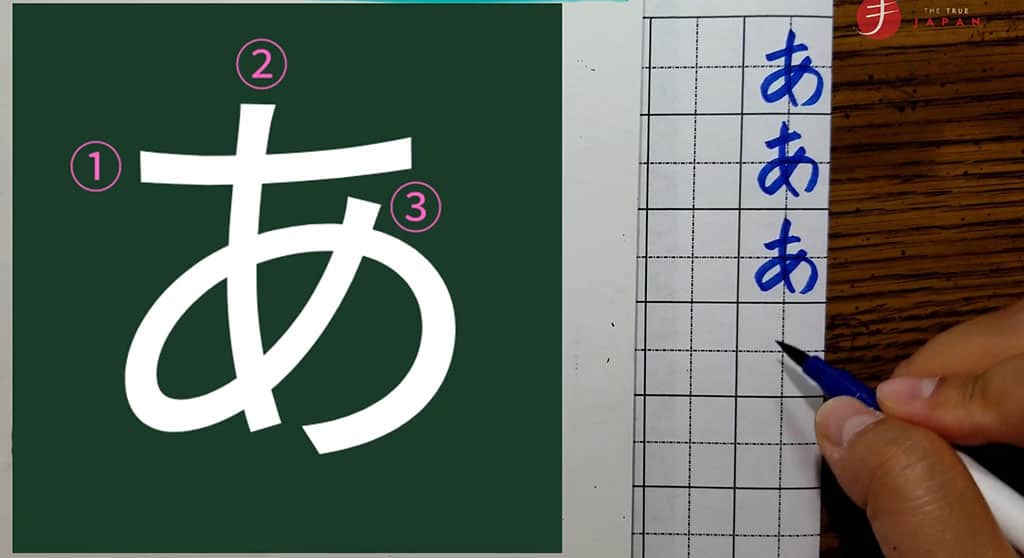
A screenshot of the Japanese hiragana character "a" with the stroke order. Next to it on the right, someone's had is seen writing it in on a piece of paper three times in blue ink.

The Complete Guide to Learning Hiragana: Reading & Writing (With Video)

ひらがな (hiragana) is the fundamental component of the Japanese writing system. カタカナ (katakana) and 漢字 (kanji) are the other two writing systems in Japanese.  If you want to learn all of the hiragana for free with step-by-step videos and descriptions, this guide is for you. In Japan, people start learning ひらがな (hiragana) at a very young age, usually in preschool or … Read more

The Himeji Castle seen from afar, with the surrounding landscape and sky visible all around. There is text in it that reads, "The Sou Form in Japanese: It Looks Like ~ I Hear That ~"

Using the Sou Form in Japanese: It Seems/Looks Like ~/ I Hear That ~

The 〜そう (~sou) suffix expresses two different things:  It seems/looks (like)  I hear (that).  Let’s take a look at how it’s used. Sou Meaning #1: It Seems/Looks (Like) ~ “It looks/seems (like)” using 〜そう expresses the speaker’s impression or opinion based on visual cues. For this usage, 〜そう can be attached to verbs and adjectives.  … Read more